


The Legend of Zelda: Ocarina of Time remake has some big shoes to fill. For many players, myself included, the original was a groundbreaking game, thanks to its story, gameplay mechanics and expansive world. With the remake now released, the question is whether it can live up to that legacy.
This new version brings the timeless classic into the modern age. Players follow the same iconic journey as Link, but upgraded graphics and revamped controls make the adventure feel smoother than ever.
Initially, I expected a relatively modest upgrade. Instead, the remake casts the game in a new light. It shows that Ocarina of Time’s success wasn’t simply lightning in a bottle: its adventure remains compelling, and some thoughtful improvements help it stand alongside today’s strongest games.
A Legendary Tale Across Time
The Ocarina of Time remake follows the same story as the original. Players take on the role of Link, a boy tasked with gathering the Spiritual Stones to save Hyrule from Ganondorf. However, things don’t go as planned, and Link must travel seven years into the future to stop his enemy’s plans. Along the way, he grows stronger and prepares to face the wielder of the Triforce of Power.
It’s a classic good-versus-evil story that explores how fate sometimes has to be faced head-on before it can be changed. That’s something I’ve always loved about the game: little by little, Link works to make Hyrule a better, more peaceful place.
Having grown up in Kokiri Forest, he initially feels like a fish out of water. His unfamiliarity with Hyrule’s peoples and customs gives him an innocence that gradually changes as he explores the world and accepts the responsibility placed upon him.
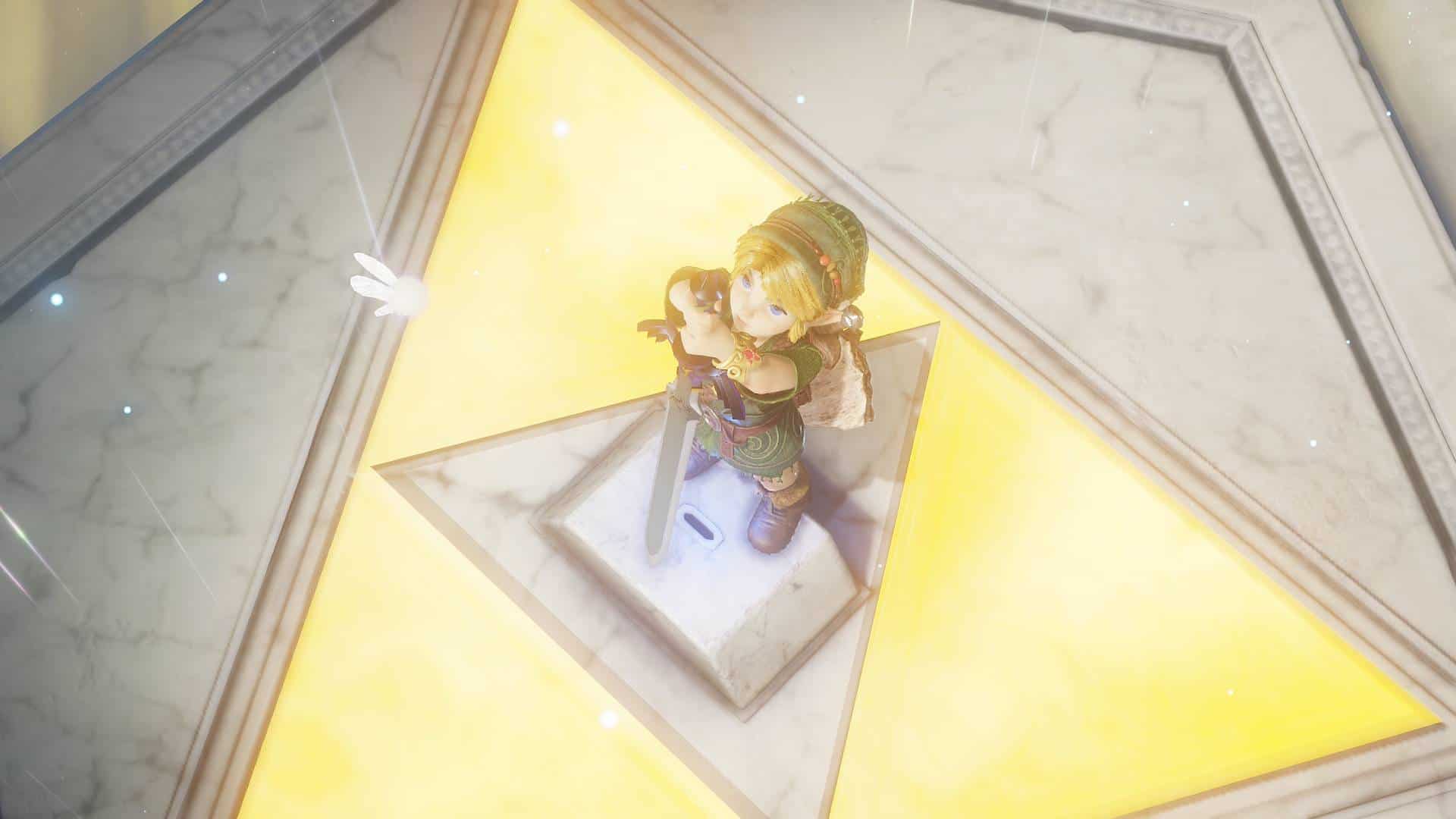
The addition of voiced cutscenes strengthens the storytelling. Characters and their emotions feel more fleshed out, giving scenes a different impact from the original’s text-based conversations. Link remains silent, but the story communicates his role clearly. At no point did I struggle to understand what was happening.
Each character has a meaningful role to play, and Link remains an iconic protagonist. The voice performances and revised presentation give some scenes greater emotional depth, reinforcing how well Ocarina of Time’s story holds up almost 30 years later.
A Hero of Time That Fights Better
Combat has always been central to Ocarina of Time. There are plenty of enemies to face throughout Hyrule, both as child and adult Link, and the remake makes those encounters feel much smoother.
Gone are the days of wrestling with the camera while targeting an enemy. It now provides a clearer view of both your opponent and your surroundings. Rather than taking damage because a rigid camera obscures the action, I felt better equipped to react to what was happening.
The improvements extend to the combat controls. Standard slashes, forward thrusts and jumping attacks all feel responsive, while assigning the shield to the left trigger feels like a natural fit. During my playthrough, I also assigned jumping to the B button, which made battles feel even more fluid. I spent less time fumbling for the right input and more time confidently targeting and attacking enemies.
A quick-select menu also makes switching tools easier. Instead of repeatedly opening the inventory, players can use the right shoulder button to cycle through items such as the Hookshot and Fairy Bow. It keeps fights moving and makes better use of Link’s growing collection of equipment and upgrades.
For me, this is the smoothest and most engaging Ocarina of Time’s combat has felt. It’s easy to pick up, with enough room to improve as you become more familiar with the controls and your enemies.

New Additions to An Already-Packed Adventure
Nintendo has introduced a couple of features that complement the existing adventure. The first is the Hall of Fallen Foes.
At first glance, it appears to be a bestiary cataloguing the enemies you’ve defeated. While it does provide background information and advice on fighting them, it also includes boss gauntlets, giving you another chance to take on the game’s bosses and improve your performance.
I enjoyed looking back through the enemies I’d overcome during the adventure, but the opportunity to revisit boss fights gives the feature more lasting appeal.
The Threads of Time tapestry is another welcome addition. It tracks your progress through main quests and side quests, gradually filling in as you complete them. It’s useful whether you’ve forgotten where to go next or are experiencing Ocarina of Time for the first time.
The tapestry itself is beautifully designed, and its guidance strikes a good balance: it helps you find your bearings without revealing so much that it spoils the adventure or feels overbearing.
Both features add something worthwhile. The gauntlets provide an opportunity to challenge yourself, while the Hall of Fallen Foes offers more information about Hyrule’s enemies. Neither was something I expected, but both were welcome additions.

Hyrule Looks and Sounds Incredible
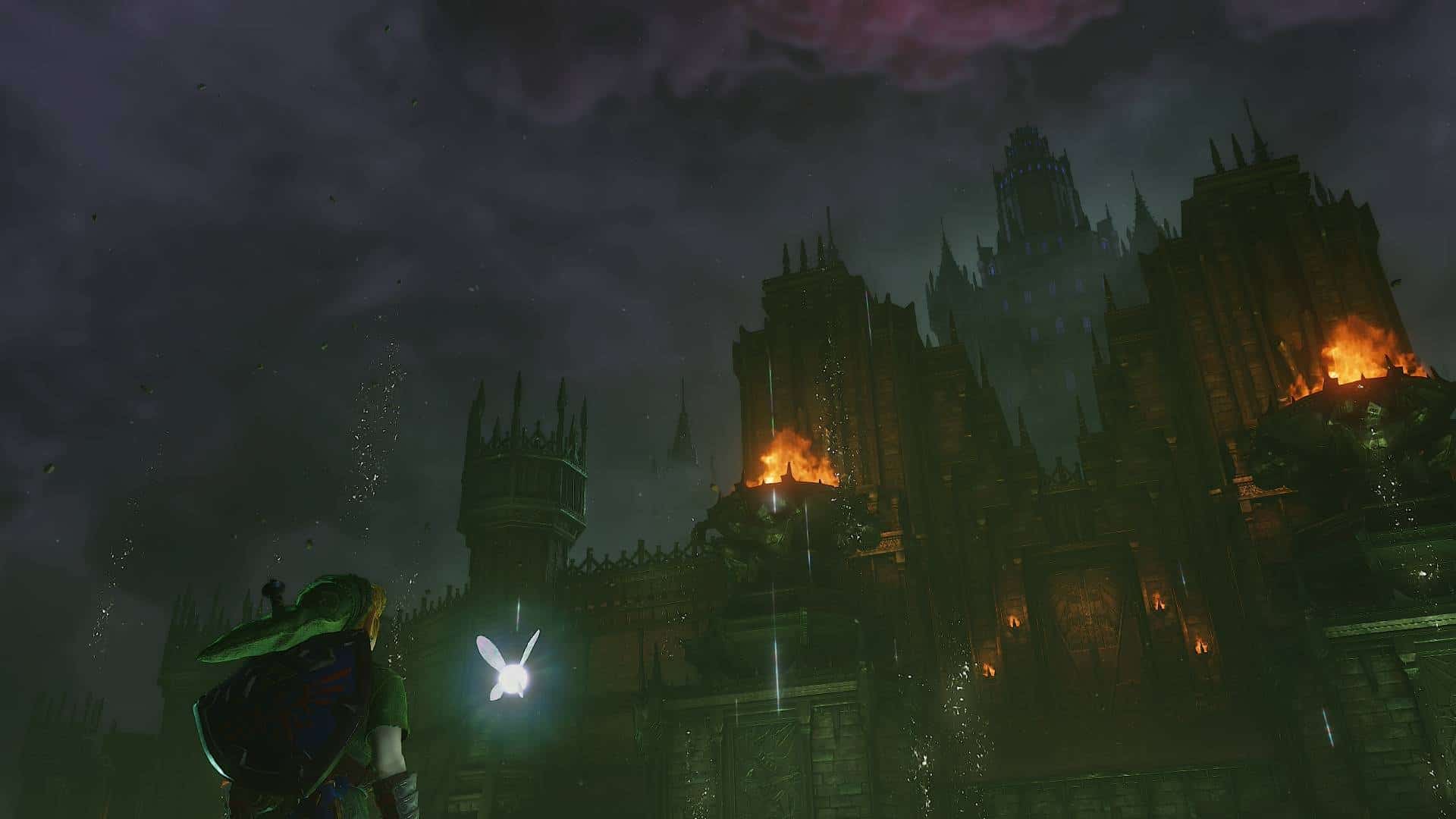
he most immediately noticeable improvement is the visual overhaul, and it doesn’t disappoint. From individual blades of grass that Link brushes aside to the character models, there’s detail throughout the world.
Each of Link’s tunics has a distinctive design. Some characters receive subtle refinements to their familiar appearances, while others have more substantial changes. Moving beyond the limitations of the Nintendo 64 makes an obvious difference, but the care invested in the redesigns goes further than a straightforward increase in detail.
Locations feel more fully realised, too. Hyrule Castle Town is a particular highlight, with a greater sense of depth and space than the original’s pre-rendered backdrop.
The temples also stand out. Each environment has been reworked to emphasise its identity. The Shadow Temple’s stonework and threatening traps make it feel more oppressive, while the Forest Temple retains an eerie, liminal quality. Combined with the sound design, these spaces make a strong impression.
The audio is equally impressive. The voice cast conveys each character’s personality and emotions effectively, helping the story’s key moments land.
The music is the highlight, though. New arrangements retain the recognisable melodies of the original while giving them a fresh sound. The nighttime variations are particularly mesmerising. They made me want to keep playing the Sun’s Song just to hear how each location sounded after dark.
A Timeless Adventure, Renewed
Remaking a game as beloved as Ocarina of Time carries considerable risk. Changes can weaken what made the original special, while an overly cautious approach can leave a remake feeling unnecessary. Here, Nintendo has delivered a version that lets newcomers and returning players experience the adventure at its best.
The story remains compelling, with voiced cutscenes bringing more personality and emotion to familiar moments. Combat is more responsive, switching equipment is convenient, and the improved camera makes battles feel fairer and easier to follow.
The visual overhaul, new musical arrangements and additional features make this a substantial upgrade over both the Nintendo 64 and 3DS versions. It’s the sort of thoughtful update that makes it easy to see why other Nintendo classics deserve similar treatment.
Before playing, I wasn’t convinced Ocarina of Time needed another remake. After reaching 100% completion, I’m glad Nintendo revisited it. Whether you’re new to Zelda or have explored Hyrule many times before, this is a magical adventure, and one I already want to play again.
A timeless adventure, beautifully reborn
Ocarina of Time returns with responsive combat, a vastly improved camera and a stunning audiovisual overhaul. Voiced cutscenes and thoughtful new features enrich an adventure that remains as compelling as ever, making this the best way to experience a Nintendo classic.
Disclosure: Power Up Gaming provided the writer with a copy of the game. This did not influence the writer’s verdict.


